
Last Modified: 06/14/2023
Financing & Reimbursements
Featured Resource
Financing
Financing needed for hearing devices is often a challenge for families of children who are deaf or hard of hearing. Public and private insurance programs and nonprofit organizations can help meet these needs. The following resources provide specific contact information for accessing financial assistance:
- Your guide to Financial assistance For Hearing aids, Better Hearing Institute [PDF]
- Funding Resources through Local Agencies/Programs: Audiology Services and Hearing Aids, American Speech and Hearing Association
- Financial Assistance: Programs & Foundations, Hearing Loss Association of American
- Comfort Audio: Different Financial Aid Options for Hearing Aids and Assistive Listening Devices
- Catalyst Center: Supporting Effective National and State Financing Policies
- The Catalyst Center is a national center dedicated to improving health care coverage and financing for Children and Youth with Special Health Care Needs (CYSHCN), including children who are deaf or hard of hearing. Their role is to create publications and products, answer technical assistance questions, research innovative state-based financing strategies, guide stakeholders to outside resources, and connect those interested in working together to address complex health care financing issues.
- Examples of the innovative strategies state Title V and Medicaid programs are using to improve and finance care for CYSHCN
- Family Resources: a directory of organizations and resources to help families of children and youth with special health care needs, listed by state. Also available in Spanish.
- Affordable Care Act Fact Sheets for Families
- The Affordable Care Act: A side-by-side comparison [PDF] of major provisions and the implications for children and youth with special health care needs
- Public Insurance Programs and Children with Special Health Care Needs: A Tutorial on the Basics of Medicaid and the Children's Health Insurance Program (CHIP)
- This tutorial gives a broad overview of Medicaid and CHIP, the many different populations these programs serve, the changes they are undergoing under health reform, and some detail to help readers think about opportunities to improve access to coverage for CSHCN, including children with hearing loss.
- Innovative Health Care Financing Strategies for Children and Youth with Special Health Care Needs: a supplement to the May 2017 issue of Pediatrics
- This supplement includes data and analysis on a variety of critically important topics such as the perception of value and quality by families of CYSHCN, care coordination, pharmacy benefits, mental health service utilization and costs, high cost-sharing and more. The supplement is available free of charge.
- Affordable Care Act and You
- Health Care Reform: What’s in it for Children who are Deaf or Hard of Hearing? [PDF]
- HealthCare.gov is the destination to access new educational information and learn what they can begin to do to get ready for open enrollment in the State Health Exchange programs. Also available in Spanish at CuidadoSalud.gov.
Reimbursement
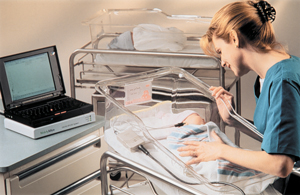
Reimbursement pertains to how payment is obtained for the provision of medical services. In regards to Early Hearing Detection and Intervention (EHDI), we are talking about the hearing health services provided to infants and young children (screening and diagnostic hearing). Payment for these and other medical charges occur one of 4 ways:
- Public Insurance Programs. For those that qualify, these programs are Medicaid, Medicare (age 65 or more) and Children’s Health Insurance Programs (CHIP).
- Private Insurance. These programs include employer provided medical insurance programs and privately purchased insurance programs.
- Financial assistance programs provided by the medical provider such as a hospital. These programs are for those that are unable to obtain insurance through their employment, can afford to privately purchase insurance and do not qualify for public program. With Medicaid expansion this group has decreased as more people should qualify for Medicaid. Financial assistance programs usually require some sort of co-payment or other contribution to the medical bill.
All reimbursement programs pay for covered medical services based on 3 things:
- The medical diagnosis for the patient’s condition
- The procedures performed or used to diagnose or treat the patient
- The allowed and negotiated rates for those procedures
This section will further describe each of these three elements.
Medical Diagnosis
All health or medical conditions are classified with descriptive “codes” or numbers for billing. Each “code” or number corresponds to an internationally recognized health condition or diagnosis. The coding system used world wide is the International Classification of Diseases, Tenth Revision, Clinical Modification or ICD-10-CM. This system is used by physicians and other healthcare providers to classify and code all diagnosis and symptoms recorded in conjunction with the care provided. The coding system provides a level of detail that is necessary for diagnostic specificity and morbidity and providers should code to the highest level of specificity possible. This coding system is periodically updated with preparation for the next version (ICD-11) being planned for future implementation in the United States.
In regards to EHDI, hearing is screened, evaluated and the result ( normal hearing or hearing loss and type) is matched with the code that most closely describes and matches the results. For example a hearing loss will be coded with the most specific code possible. Coding should e specific to each ear if there is a difference.
Example:
| Diagnosis: | Code: |
|---|---|
| Hearing loss (unspecified sensorineural hearing loss) | H90.5 |
| Conductive hearing loss, bilateral (both ears) | H90.1 |
| Sensorineural hearing loss, bilateral (both ears) | H90.3 |
| Mixed hearing loss (conductive and sensorineural) | H90.6 |
Procedures Performed
All of the procedures or “tests” used to determine and describe a health or medical condition must also be described with a code. In this case the coding set is called “Current Procedural Terminology” or more commonly known as CPT codes. CPT codes are a set of medical codes used by physicians, allied health professionals, non-physician practitioners, hospitals, outpatient facilities, and laboratories to describe the procedures and services they perform.
Specifically, CPT codes are used to report these procedures and services to federal and private payers for reimbursement of rendered healthcare.
In regards to EHDI, the tests used to screen, diagnose and treat hearing related disorders are matched with a code that most closely describes the screening or diagnostic test(s) used. For example the actual act of screening or diagnosing hearing is matched with a specific code for the screening or diagnostic tests used.
Example:
| Test or Procedure: | Code: |
|---|---|
| OAE Screening (automated) | 93558 |
| AABR Screening (automated) | 92650 |
| Diagnostic OAE | 92558 |
| Diagnostic ABR | 92652 |
| Audiometry – Visual Reinforcement | 92576 |
| Audiometry – Conditioned Play | 92582 |
Allowed and Negotiated Rates
Medicaid and Medicare have determined schedules of diagnosis and procedures they will cover or pay for. They also have determined set rates of payment or amounts they will pay. Most private insurers follow the Center for Medicaid/Medicare Services (CMS) lead in what they will pay for or cover in their insurance policies.
Amounts of payment or reimbursement varies depending on the program, policy with variation between states. In the case of newborn screening, the procedure and its charges may be bundled into the entire delivery charge which would have been negotiated to include all services provided during a delivery stay.
Coding Resources
For detailed and specific information on codes and coding for hearing and hearing related disorders, please see the following resources and links: